
Transitional urbanism: definition and origin
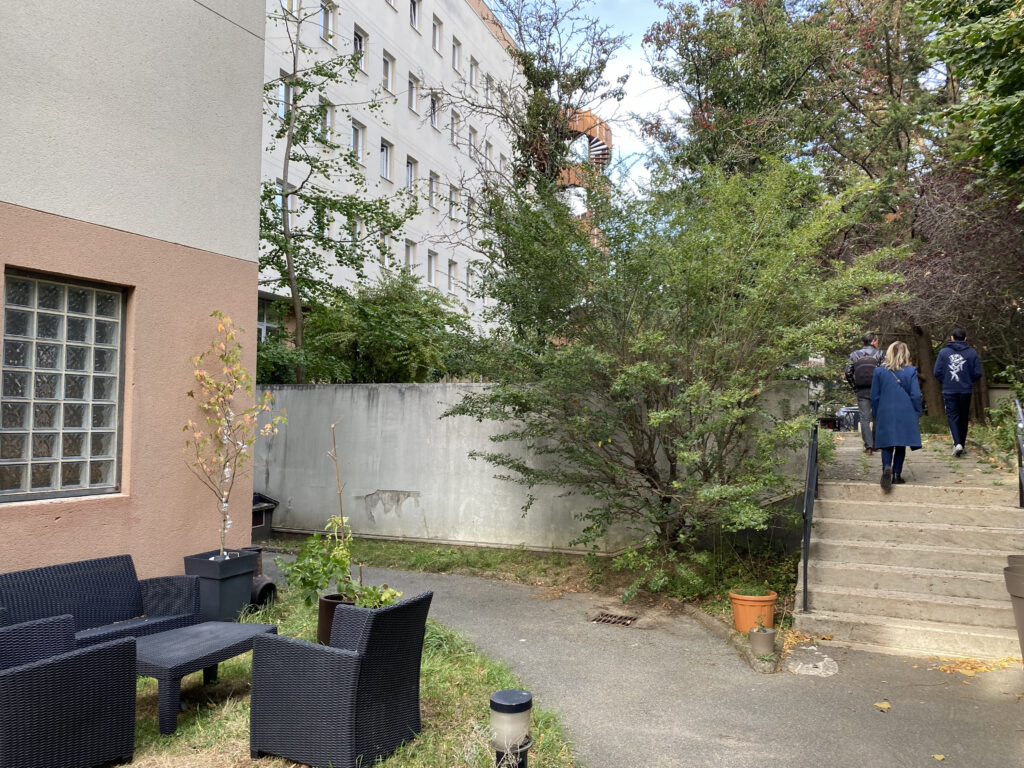
Transitional urban planning temporarily reactivates vacant land or buildings, restoring their value and potentially paving the way for their future use. Emerging in France since the 2010s, it offers an environmental, economic, and social solution that addresses contemporary challenges.
Transitional urban planning takes root in neglected indoor and outdoor urban spaces, resulting from indecision, budgetary problems, or environmental constraints. Its goal is to restore value and use to these places, transforming them into opportunities for densification rather than urban expansion. It is part of a circular urban planning approach, rebuilding the city from what already exists.
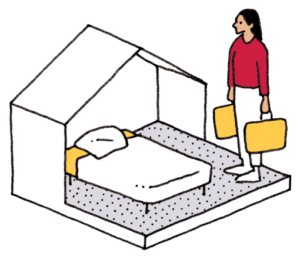
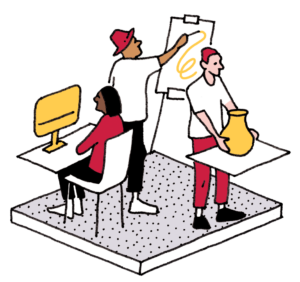
Transitional urban planning projects include many types of temporary occupations, such as third places, temporary gardens, art exhibitions, markets, pop-up stores, emergency shelters and reception centers for people in precarious situations, urban experimentation laboratories, cultural festivals, and more.
Participatory projects for sustainable transformation
With its local roots, transitional urban planning involves local stakeholders and residents in the transformation process. This participatory approach ensures that the community takes ownership of the changes in the long term, thus paving the way for the second life of the rehabilitated spaces.
Transitional urban planning: the example of the Lyon metropolitan area
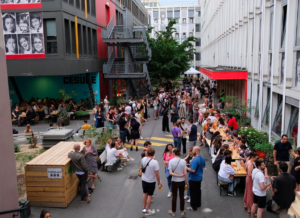
In 2020, the Plateau Urbain cooperative, in partnership with Intermède, collaborated with Greater Lyon to help it move beyond initial experiments with temporary occupation and define a transitional urban planning strategy for the entire metropolitan area. This initiative aims not only to evaluate the concrete impacts and benefits of such projects through practical application, but also to promote collective learning.
The goal is to enable the actors involved to develop their skills and increase their autonomy. A key element of this approach is careful consideration of the local context of the intervention and the specific needs of each location, which is at the heart of the process.
The studies that can be conducted thus place the transitional approach within broader considerations in terms of space and time, thereby contributing to an urban fabric that is no longer merely temporary but also prefigurative.
How does transitional urban planning serve public policy?
Transitional urban planning is emerging as a multifunctional tool for various public policies, responding to specific requirements:
- As part of a heritage policy, it helps with the maintenance, upkeep, redevelopment, and reintroduction to the market of neglected spaces.
- In support of urban planning policies, it offers a more environmentally friendly approach to urban planning, accompanying urban transformation by foreshadowing future projects.
- For reception and hospitality policy, it offers a solution in terms of providing shelter and meeting immediate needs, particularly in terms of emergency accommodation.
- In the context of economic policy, it is emerging as a short-term real estate solution, suitable for start-up companies, as well as for low-profit activities of general or local interest.
In terms of social and cultural activities, it encourages the creation of local communities around a project or building, thereby fostering civic engagement through action.
Challenges for the future
Today, transitional urban planning is gaining institutional recognition, attracting the interest of various public and private actors. However, this institutionalization poses the challenge of maintaining the flexibility and customization inherent in this practice. By evolving towards an even more participatory, diversified, and thoughtful approach, it could become an essential lever in urban development. However, economic issues and the risk of gentrification call for constant vigilance to ensure its viability.
As transitional urbanism becomes more established, the challenge remains to strike a balance between institutional structure and creative flexibility in order to build ever more sustainable and inclusive cities.